al-Baghawi, Ibn Kathir, al-Tabari — original text, three books for one verse
Three classical commentaries — al-Baghawi's «Ma'alimut-tanzil», Ibn Kathir's «Tafsirul Qur'onil azim», and al-Tabari's «Jomi'ul-bayon» — in the original Arabic text, verse by verse. Qur'an quotations, hadiths (with their grading), narrators, and the author's own markers within the text are automatically highlighted. Tafsir translation is generated by AI only when you request it, paragraph by paragraph — with a warning and teacher review. Download the surahs once, then read them offline.
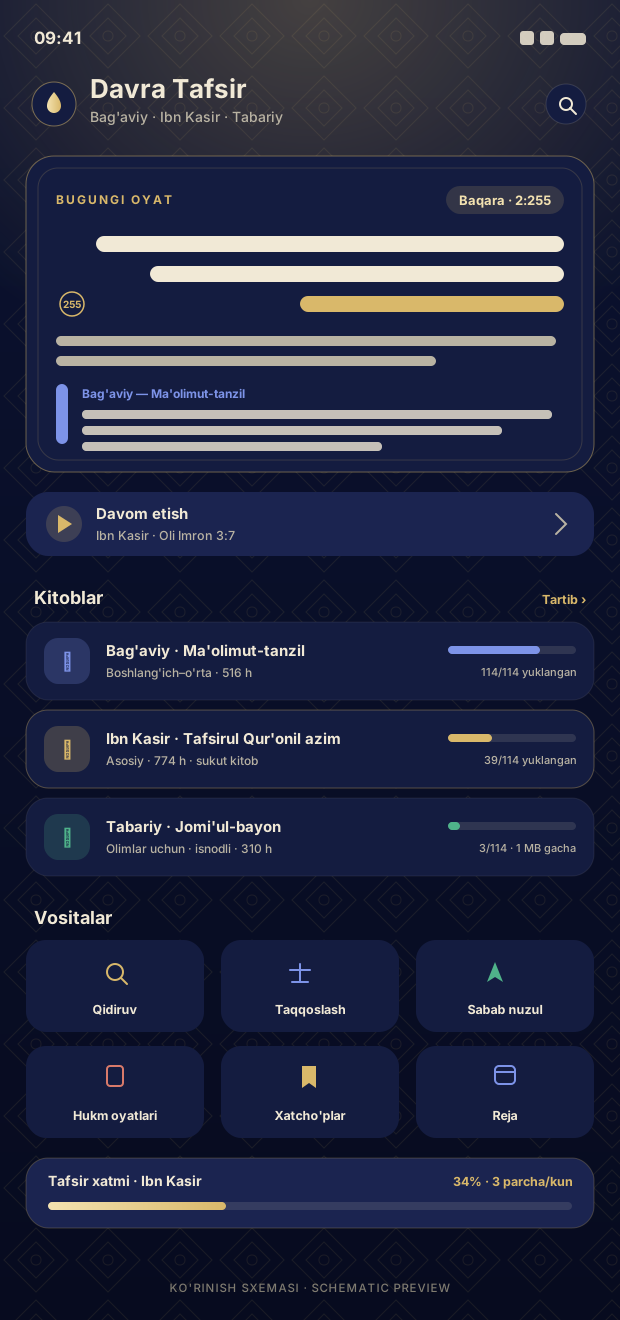
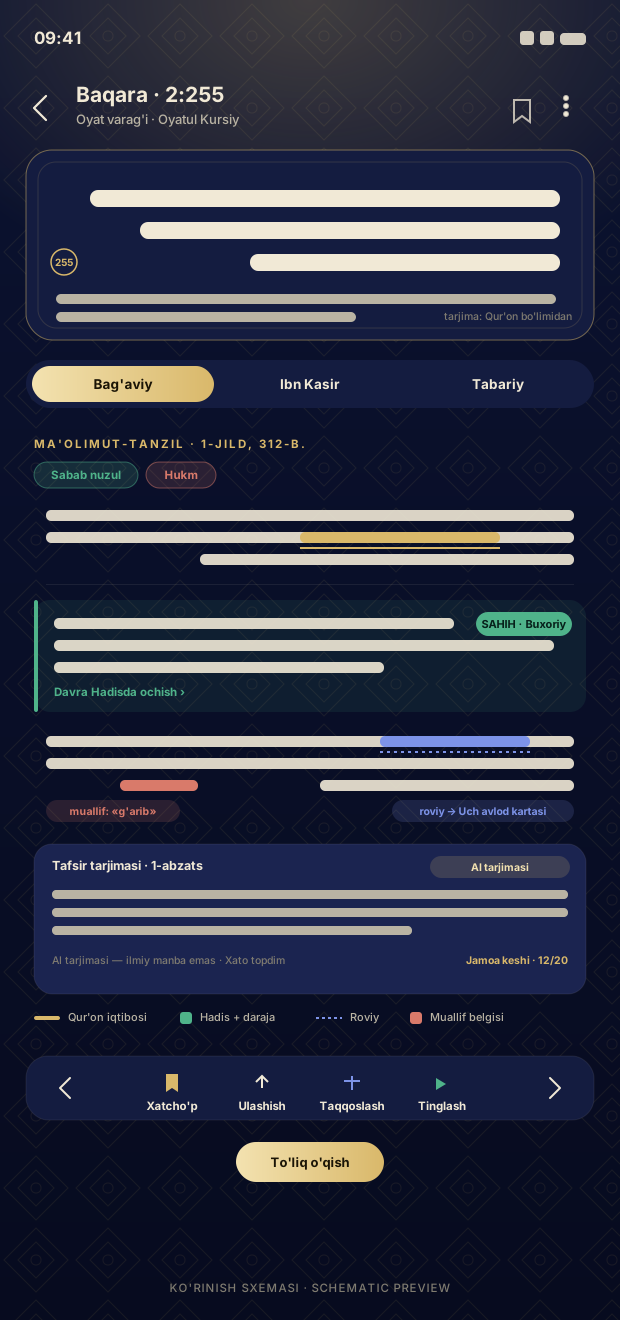
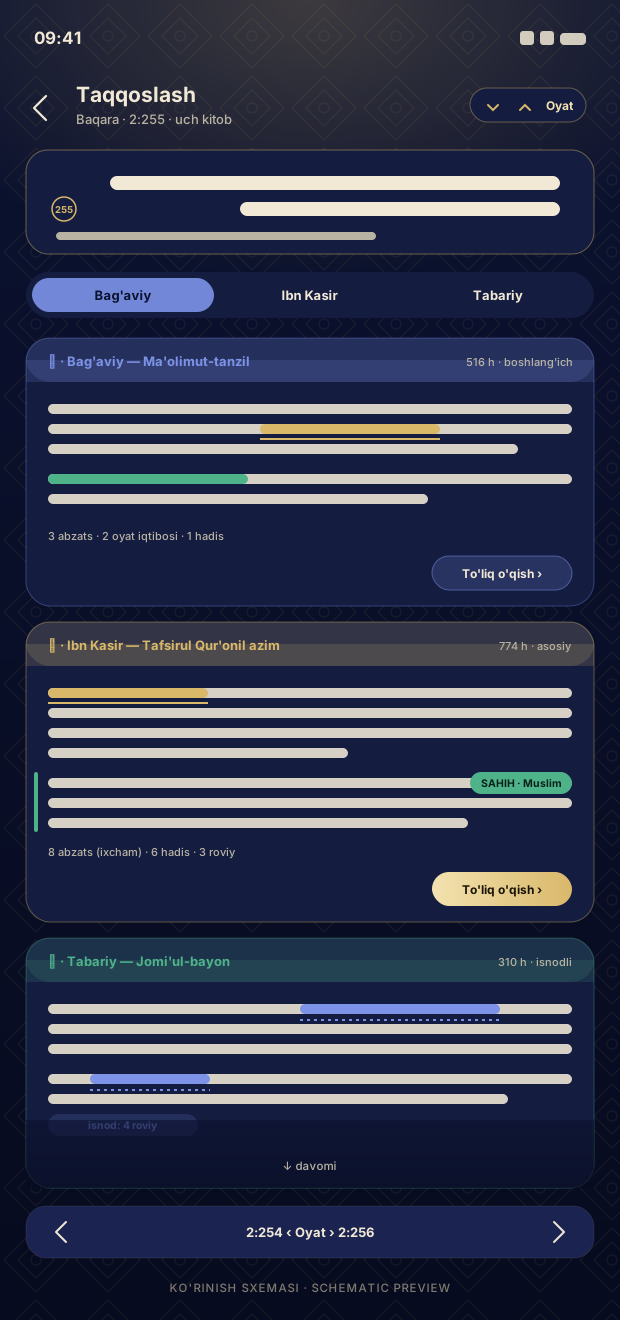
Select a verse — three tafsirs side by side.
From beginner to scholar level.
More detailsVerse page: verse, translation, and tabs for the three books.
More detailsOne verse — the views of three mufassirs on one screen.
More detailsEvery source within the tafsir — to its place with one tap.
More detailsTafsir translation — only when requested; the text is on the device.
AI translation only when requested, with a warning.
More detailsDownload once and read without internet.
More detailsArabic word, verse key, or surah number.
More detailsDivide the book by a deadline, with your progress available on all devices.
More detailsChat, voice, bot, widget, web.
Send the excerpt to the conversation — the recipient opens it in their own language.
More detailsThe tafsir text and its translation are played aloud—the verse itself is only played in the reciter's voice.
More detailsIn any chat, @DavraTafsirBot 2:255 — a card.
More detailsThe tafsir of the verse of the day on the home screen; davra.online/tafsir/2:255.
More detailsAll three books were taken from digital editions in the OpenITI open corpus (Shamela copies); the edition is specified on the book card. Each surah package is verified against a checksum using a signed list on the server. The tafsir text is never written from memory, a search engine, or artificial intelligence.
No. What is translated here is the exegete’s own commentary (the tafsir text). Translations of the verses are taken from the verified translations in the Davra Qur’an section, while the hadiths within the tafsir are shown with human translations from the Davra Hadith database. AI does not alter them.
AI translation is a draft to help with understanding, not a scholarly source; therefore, it is always shown alongside the original Arabic text and marked «AI translation». Frequently requested passages are added to the teacher’s queue; once a teacher approves one, it receives the «verified» label. If you notice an error, report it via «I found an error».
The app does not issue rulings of its own. The author’s own words («weak», «gharib», «munkar», «from the Isra’iliyyat») are highlighted in the text with colored labels; if a hadith is found in the Davra Hadith database, its grading is shown with a separate seal. The remaining assessment is left to the reader and the teacher.
Yes. Surahs are downloaded as packages—the surah you open is downloaded automatically, and you can also download the entire book. The size is shown on the book card (long surahs are up to 1 MB). Downloaded text, bookmarks, plans, and reading progress work offline; only a new AI translation request requires an internet connection.
Interface, book titles, and explanations in 18 languages. The tafsir text itself is in Arabic; its translation is done paragraph by paragraph into the language you request and stored in the community cache — once a paragraph has been translated into a language, it becomes instantly available to subsequent readers.
Texts: the OpenITI corpus (editions of al-Baghawi, Ibn Kathir, and al-Tabari), under the CC BY-NC-SA 4.0 license; packages are distributed under the same terms. The Qur'an text is from the King Fahd Complex (Hafs). Publication and licensing information is on the “About section” sheet in the app.
